Why AI innovation in healthcare needs effective implementation
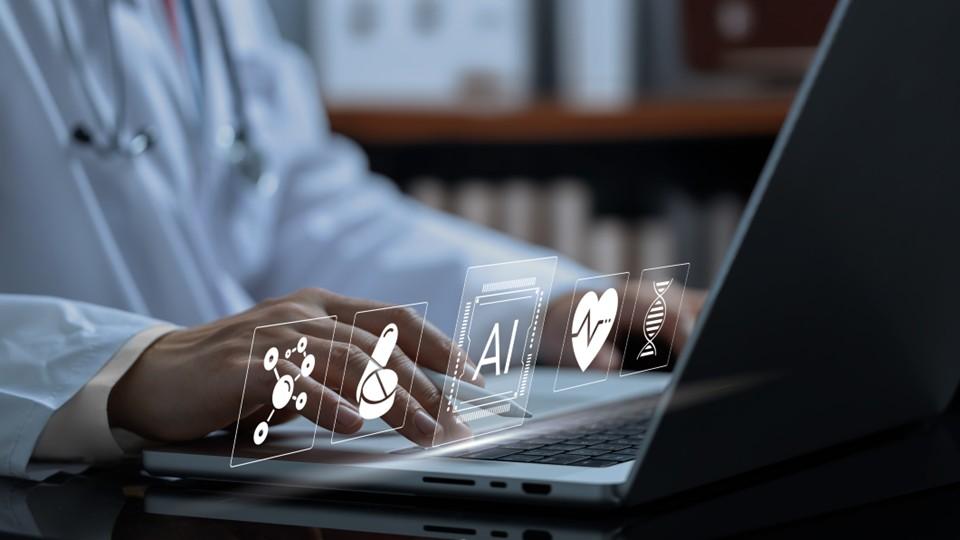
Healthcare is undergoing a significant transformation, with emerging technologies reshaping how care is delivered. Innovations that once seemed far removed from health settings like artificial intelligence (AI) are now actively being integrated into clinical workflows. From supporting diagnostic decisions to streamlining administrative tasks and enhancing patient monitoring, AI is already making an impact across the care continuum.
Traditionally, healthcare systems have adopted new technologies with caution due to strict regulation, complex systems, and often analog-based processes. However, in the face of growing workforce shortages, rising rates of chronic disease, and higher patient expectations, global health leaders are increasingly turning to AI and digital solutions to drive more sustainable and resilient healthcare delivery.
Embedding AI into clinical workflows successfully
Successful AI implementation ultimately depends on how well these technologies align with the realities of clinical practice. The challenge lies not only in developing effective AI tools, but also in ensuring they integrate seamlessly into existing workflows without creating additional barriers for healthcare professionals.
Technology should be designed to enhance the expertise and judgment of healthcare professionals, not create additional roadblocks that take time away from patient interactions. That’s why it’s critical to understand who delivers care and how it is delivered in reality, in order to effectively implement new technologies into workflows that genuinely support clinical needs and improve operational efficiency.
Healthcare professionals at the forefront of innovative care
Doctors and nurses are on the frontline of care delivery transformation, providing the interface between patients and innovation. Healthcare professionals not only diagnose and treat, but they also coordinate care, monitor patients, educate families, and make critical decisions under pressure. Understanding the multifaceted nature of these roles is essential when building AI solutions into clinical workflows. It ensures that the tools that organisations build are not only clinically sound, but also practical and empathetic.
Having spent some of my career as a nurse in the highly pressured environment of emergency departments, I learnt that decisions are made in seconds, documentation must be precise, and coordination is critical. In these settings, even the most sophisticated algorithm is ineffective if it doesn’t fit into the daily reality of clinical care. When these considerations are ignored, tools can remain underutilised, misunderstood, or even actively resisted by those they are intended to help.
Today, the application of AI in healthcare is being used to help inform and optimise treatment plans, and provide evidence-based interventions based on a patient’s age, comorbidities, and medication history. AI powered clinical decision-support (CDS) tools, such as ClinicalKey AI, offer quick access to evidence-based clinical information to support and validate medical decision-making. The use of AI as a real-time support is invaluable, especially in environments where time and accuracy are critical to patient outcomes.
Reducing workflow friction and empowering healthcare professionals
As AI becomes increasingly integrated into clinical workflows, healthcare professionals must be equipped with the skills and confidence to use it safely and effectively. This includes understanding how AI outputs are generated, how to interpret them, and how to apply them in context.
Reducing workflow friction isn’t just about streamlining documentation or automating tasks; it’s about equipping healthcare professionals with the correct tools to make informed decisions. That means ensuring they have the right training, the right context, and the right level of trust in the tools they’re using. Only by empowering healthcare professionals through education and support can we unlock AI’s full potential and ensure its long-term adoption.
The effectiveness of AI will be judged by the trustworthiness and accuracy of its outputs. Confidence among doctors and nurses grows when information is evidence-based, sources are validated, and risks of misinformation and bias are reduced. Transparency is further improved when references are clearly cited and accessible, enabling healthcare professionals to verify and understand the origins of the data they rely on.
Alongside building faith in the dependability of AI-powered solutions, healthcare leaders must invest in robust digital infrastructure to build workforce readiness. They also need to implement rigorous evaluation frameworks that are truly reflective of the realities of clinical practice. This includes assessing where and how AI tools are supporting healthcare professionals across specialties and settings, and ensuring that this technology advances clinical practice and doesn’t diminish the quality of patient care.
The path forward
As technology continues to transform healthcare, the innovations that endure are those developed with a deep understanding of healthcare professionals’ roles, grounded in the realities of patient care and designed to support clinical practice. This means involving healthcare professionals at every stage, from design to deployment, implementation, and ongoing evaluation. By rooting AI implementation in clinical insight, and driven by empathy, we can ensure that these technologies lead to better outcomes for patients and stronger support for the professionals who care for them.
About the author
 Tim Morris is the vice president of go-to-market at Elsevier, where he brings over 30 years of healthcare industry experience. He specialises in knowledge management, clinical decision support and hospital workflow solutions, with a focus on international markets. Morris began his professional career in healthcare as a charge nurse in London emergency departments, where he gained valuable experience in delivering patient care. He then moved on to research and management roles within the NHS, where he developed a deep understanding of healthcare delivery systems. Following this, he transitioned to direct sales and product development roles with a range of public and private health companies, honing his expertise in international opportunities for sales and partnerships in clinical decision support. For the past eight years, Morris has been working at Elsevier, a global information analytics company that specialises in science, health, and technology content. In his role, has been recognised for his contributions to the healthcare industry, regularly speaking at conferences and contributing to publications on topics such as new models of care, nursing practice, and clinical decision support. He is passionate about driving innovation and improving patient outcomes through the use of cutting-edge technology and data-driven insights. He obtained a BSc in Health Services from the University of Surrey.